

Commoditized Nostalgia
When memory is stripped of context and sold back to us

I’ve been thinking a lot about nostalgia and how often it shows up in current brand trends. It’s rare to sit through a pitch these days without some kind of retro imagery dropped into a deck.
I’ve even caught myself looking back at old designs and products with a familiar, itchy feeling that things “used to be better.” There’s a deep fixation with the past, sometimes even with the pasts of others, where we live vicariously through inherited memories and secondhand history.
That impulse is normal. There’s a lot to be learned by looking backward. But lately, it feels like the conversation has shifted. People are tiring of nostalgia bait. Our propensity to romanticize the past has been weaponized to keep us living there.
It’s a type of commoditized nostalgia: when memory gets treated as a resource to be extracted, repackaged, and sold back to consumers without adding new meaning, perspective, or cultural value. “Nostalgia bait” is the more common term.
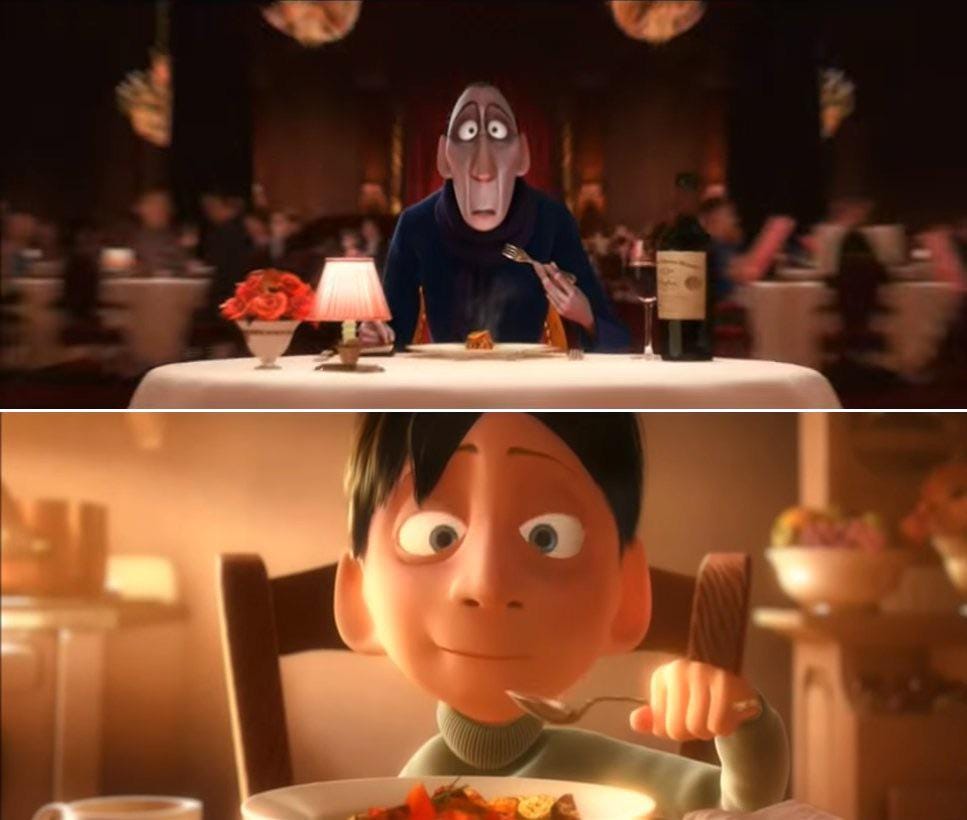
This type of nostalgia works especially well. It can even be used to make people excited for a time they themselves never experienced, idealized visions of the past used to breed envy.
Culturally, we see this in the rise of Gen Z’s obsession with the 80s and 90s.
Economically and politically, many young conservatives look back to the 1950s as a time when a single income could support a full-time, single-parent household with multiple children and homeownership.
And yet, these romanticized histories are often very different from the reality of how people actually lived. Still, there are plenty of forces out there telling you that if you buy this thing, or vote this way, you too can experience an alternate time.

Nostalgia can be a powerful feeling and a valuable tool, a way to look into the past and draw out emotion or inspiration. The problem arises when moments are pulled away from their context, twisted into something that never fully existed, and repackaged as a manufactured feeling meant to prompt a reaction.
We don’t need to reject nostalgia entirely. In fact, we shouldn’t. But using it well requires more than recognition or reuse. It means slowing down to understand what made something meaningful in the first place, the conditions, constraints, values, and intentions that gave it weight. That kind of engagement takes care. It asks for context instead of shortcuts, interpretation instead of imitation. And while it doesn’t deliver instant returns, it creates something far more durable: relevance rooted in understanding, not familiarity. Nostalgia, when treated this way, becomes a tool for exploration rather than escape.
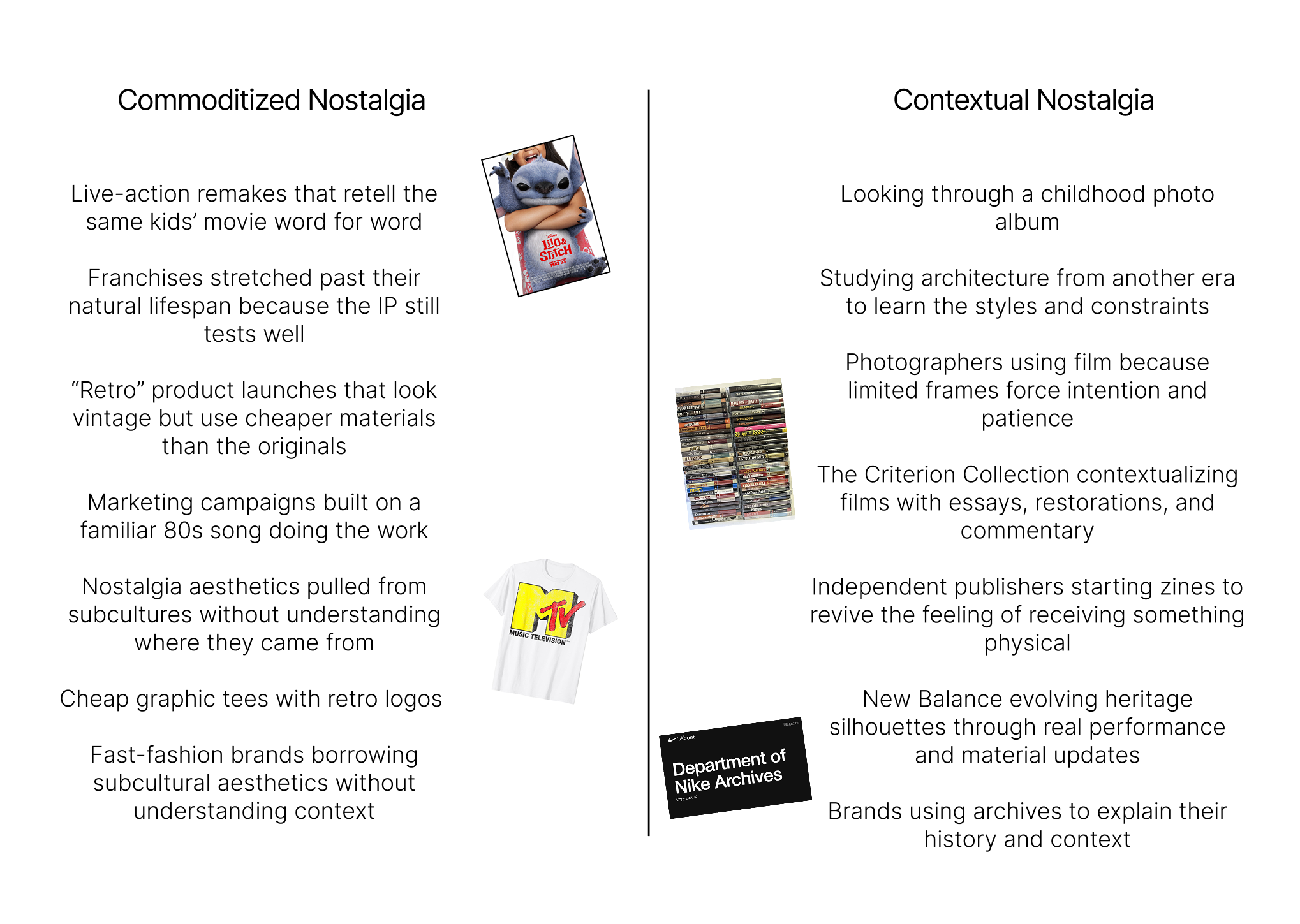
For a brand or movement to tap into authenticity, nostalgia can’t be weaponized against the consumer; eventually, it grows tired. History can provide context, but there are moments when a complete rejection of nostalgia is necessary to create something truly new.
It’s not enough to make something “retro” for the sake of it. Creating work that genuinely connects with people requires something deeper: authenticity rooted in intention, relevance, and an honest understanding of why the past matters, or why it should be left behind.
Thanks for reading!

Thanks for the restack @John Thompson 👀
Great stuff, James. Would be interested to hear about a particular example of contextualized nostalgia in greater detail.